

Construction Sector Georgia: 10,495 Permits, $241M Invested and 86% Growth
The construction sector Georgia is experiencing rapid and measurable growth. Construction and building — the global business of creating physical infrastructure such as residential buildings, highways, bridges, factories, airports, and power plants — has emerged as one of Georgia’s most dynamic industries. Furthermore, the data from recent years confirms that this growth is not a short-term spike but a sustained upward trend across employment, investment, turnover, and completed projects.
Employment: Tbilisi Leads the Way
In the first quarter of 2017, there were 58,416 employees in Georgia’s construction sector. This figure rose to 67,351 in the second quarter and 71,394 in the third quarter of the same year. Additionally, from 2011 to 2017, employment in the construction sector remained relatively stable across the country as a whole.
Tbilisi consistently leads all other cities in construction employment. In 2016, 59.6% of all construction employees were based in Tbilisi. In total, 814 employed persons in the sector represented 1.1% of all employed people in Georgia at that time.
Compensation: A Steady Rise Since 2008
One of the most notable trends in the construction sector Georgia has seen is the consistent rise in employee compensation. In 2008, 2009, and 2010, the average reimbursement stood at GEL 634. By the first and second quarters of 2017, this figure had risen to between GEL 1,951 and GEL 2,011 — a significant increase that reflects both the growing demand for skilled labor and the broader economic development of the sector.
Turnover: Rapid and Sustained Growth
According to the National Statistics Office of Georgia, construction business turnover has grown rapidly in recent years. The figures for recent years are as follows:
| Year | Construction Turnover |
|---|---|
| 2013 | GEL 3,244 million |
| 2014 | GEL 3,807 million |
| 2015 | GEL 5,287 million |
This consistent upward trajectory demonstrates that demand for construction services in Georgia has grown substantially year over year. Consequently, both local and international businesses operating in the sector have benefited from an expanding market.
Investment: Strong Growth With Notable Peaks
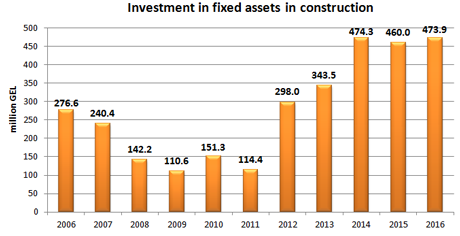
Overall investment rates in Georgia’s construction sector have fluctuated over the years. Investment rose notably in 2014, while the lowest recorded rates occurred in 2009 and 2011. Nevertheless, the long-term direction has been clearly upward.
In the first three quarters of 2017 alone, construction sector investment reached USD 241 million. Moreover, the full-year 2017 figure represented an increase of 86% compared to 2016 — making it one of the strongest investment years the sector has recorded.
Permits and Completed Construction in 2017
The scale of construction activity in Georgia is further reflected in permitting and completion data. In 2017, a total of 10,495 construction permits were issued throughout the country. Furthermore, 2.2 million square meters of space were completed in the same year — an increase of 1.3% compared to the previous year.
Looking Ahead
The construction sector Georgia is building represents a significant and growing part of the national economy. With rising compensation, expanding turnover, record investment figures, and increasing numbers of completed projects, the sector offers real opportunities for investors, developers, and skilled professionals alike. Additionally, as Tbilisi continues to lead construction activity, opportunities in secondary cities are also beginning to emerge.
For more information on investment opportunities in Georgia’s construction and real estate sectors, explore our Investment Guide and Business Insights blog on Business Georgia.
You can also find the latest sector data at the National Statistics Office of Georgia.
5,287 million GEL.
Construction Sector Georgia: 10,495 Permits, $241M Invested and 86% Growth
The construction sector Georgia is experiencing rapid and measurable growth. Construction and building — the global business of creating physical infrastructure such as residential buildings, highways, bridges, factories, airports, and power plants — has emerged as one of Georgia’s most dynamic industries. Furthermore, the data from recent years confirms that this growth is not a short-term spike but a sustained upward trend across employment, investment, turnover, and completed projects.
Employment: Tbilisi Leads the Way
In the first quarter of 2017, there were 58,416 employees in Georgia’s construction sector. This figure rose to 67,351 in the second quarter and 71,394 in the third quarter of the same year. Additionally, from 2011 to 2017, employment in the construction sector remained relatively stable across the country as a whole.
Tbilisi consistently leads all other cities in construction employment. In 2016, 59.6% of all construction employees were based in Tbilisi. In total, 814 employed persons in the sector represented 1.1% of all employed people in Georgia at that time.
Compensation: A Steady Rise Since 2008
One of the most notable trends in the construction sector Georgia has seen is the consistent rise in employee compensation. In 2008, 2009, and 2010, the average reimbursement stood at GEL 634. By the first and second quarters of 2017, this figure had risen to between GEL 1,951 and GEL 2,011 — a significant increase that reflects both the growing demand for skilled labor and the broader economic development of the sector.
Turnover: Rapid and Sustained Growth
According to the National Statistics Office of Georgia, construction business turnover has grown rapidly in recent years. The figures for recent years are as follows:
| Year | Construction Turnover |
|---|---|
| 2013 | GEL 3,244 million |
| 2014 | GEL 3,807 million |
| 2015 | GEL 5,287 million |
This consistent upward trajectory demonstrates that demand for construction services in Georgia has grown substantially year over year. Consequently, both local and international businesses operating in the sector have benefited from an expanding market.
Investment: Strong Growth With Notable Peaks
Overall investment rates in Georgia’s construction sector have fluctuated over the years. Investment rose notably in 2014, while the lowest recorded rates occurred in 2009 and 2011. Nevertheless, the long-term direction has been clearly upward.
In the first three quarters of 2017 alone, construction sector investment reached USD 241 million. Moreover, the full-year 2017 figure represented an increase of 86% compared to 2016 — making it one of the strongest investment years the sector has recorded.
Permits and Completed Construction in 2017
The scale of construction activity in Georgia is further reflected in permitting and completion data. In 2017, a total of 10,495 construction permits were issued throughout the country. Furthermore, 2.2 million square meters of space were completed in the same year — an increase of 1.3% compared to the previous year.
Looking Ahead
The construction sector Georgia is building represents a significant and growing part of the national economy. With rising compensation, expanding turnover, record investment figures, and increasing numbers of completed projects, the sector offers real opportunities for investors, developers, and skilled professionals alike. Additionally, as Tbilisi continues to lead construction activity, opportunities in secondary cities are also beginning to emerge.
For more information on investment opportunities in Georgia’s construction and real estate sectors, explore our Investment Guide and Business Insights blog on Business Georgia.
You can also find the latest sector data at the National Statistics Office of Georgia.