
Georgian Tax Model: 6 Taxes, Zero Bribes and 4th Lowest Burden in the World
The Georgian tax model stands out as one of the most straightforward and business-friendly systems in the world. According to the Doing Business Report commissioned by the World Bank, Georgia ranks 9th in the world in 2018 by ease of doing business. Furthermore, according to the Tax Misery Index Ranking published by Forbes Magazine, Georgia holds the 4th smallest tax burden in the world — a remarkable position for a developing country.
A Fair and Transparent Tax Environment
The Government of Georgia is dedicated to maintaining a fair and transparent tax environment, protecting business interests, and operating a reliable tax administration system. Taxes in Georgia are collected on both state and local levels, providing a clear and structured framework for businesses of all sizes.
Only Six Taxes — Here Is What They Are
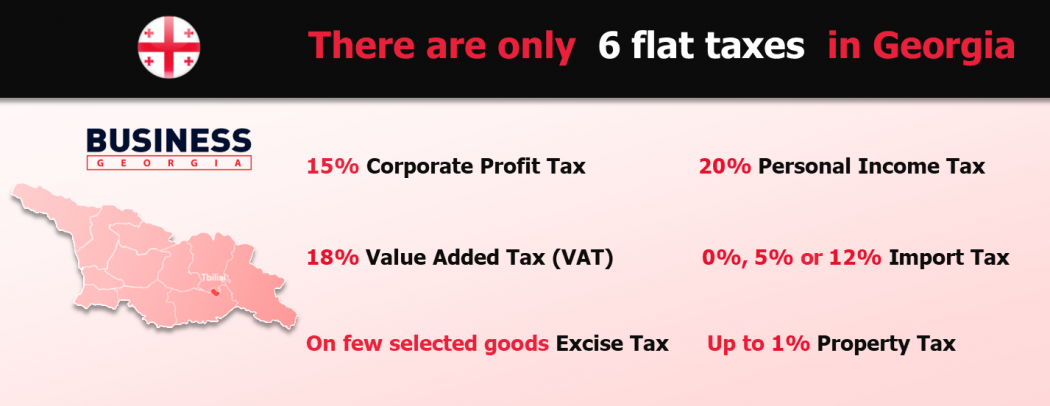
One of the most attractive features of the Georgian tax model is its simplicity. Georgia has only six taxes in total. Five of these are national-level taxes:
- Personal income tax
- Corporate income tax
- Value Added Tax (VAT)
- Excise tax
- Import tax
The sixth tax — property tax — is levied at the local level.
Notably, personal income tax, dividend tax, and royalty tax are set at 5%. Moreover, Georgia does not impose payroll tax, social security tax, capital gains tax, wealth tax, or inheritance tax — making it significantly less burdensome than most comparable economies.
Constitutional Protection Against Tax Increases
Under the Economic Liberty Act, the Government of Georgia is not permitted to increase national tax rates — with the exception of excise tax — or to introduce new taxes without holding a national referendum. This provision gives businesses a strong legal guarantee of fiscal stability when operating in Georgia.
Registering for Tax in Georgia
Individuals beginning economic activities in Georgia are required to register with the Georgian Tax Administration (GTA) before starting operations and must obtain a Tax ID.
- Georgian citizen non-entrepreneur individuals may use their Personal ID for this purpose.
- Foreign citizen non-entrepreneur individuals must register with the GTA prior to filing their annual personal income tax returns and obtain a Tax ID.
Internal Processing Regime: A Key Benefit for Exporters
According to the Tax Code of Georgia, companies that produce goods intended for the export market can apply for an Internal Processing Regime license through the Ministry of Finance. This license grants the company the right to import raw materials without paying import/customs tax or VAT on those materials — a significant cost advantage for export-oriented businesses.
Accelerated Depreciation and Loss Carry Forward
The Tax Code of Georgia also provides companies with the opportunity to use accelerated depreciation on capital assets, including full deduction during the first year. Additionally, businesses can carry forward losses for corporate profit tax purposes for up to 10 years — offering meaningful flexibility for long-term financial planning.
Double Taxation Treaties and Capital Freedom
Georgia has signed Double Taxation Avoidance Treaties with 52 countries, reducing the tax liability for international businesses operating across multiple jurisdictions. Furthermore, there are no restrictions on currency convertibility or repatriation of capital and profit, making Georgia an open and accessible environment for foreign investors.
Transparency and Trust: What the Data Shows
According to the Global Corruption Barometer by Transparency International, 0% of interviewed respondents reported paying a bribe to the tax administration in Georgia. Additionally, the World Economic Forum’s Global Competitiveness Report named Georgia among countries with low tax rates.
Together, these indicators reinforce the simplicity, reliability, and integrity of the Georgian tax model — for both local entrepreneurs and international businesses considering Georgia as their base of operations.
For more information on doing business in Georgia, explore our Business Services section and Investment Guides on Business Georgia.
You can also consult the official Georgian Tax Administration website and the World Bank Doing Business Report for further reference.
Author: Tamar Devdariani © Business Georgia
ქართული საგადასახადო მოდელი: 6 გადასახადი, ნულოვანი მექრთამეობა და მსოფლიოში მე-4 ყველაზე დაბალი ტვირთი
ქართული საგადასახადო მოდელი მსოფლიოში ერთ-ერთ ყველაზე გამარტივებულ და ბიზნესისთვის მიმზიდველ სისტემად გამოირჩევა. მსოფლიო ბანკის Doing Business Report-ის მიხედვით, საქართველო 2018 წელს ბიზნესის კეთების სიმარტივით მსოფლიოში მე-9 ადგილს იკავებს. გარდა ამისა, Forbes Magazine-ის Tax Misery Index Ranking-ის მიხედვით, საქართველო მსოფლიოში მე-4 ყველაზე დაბალი საგადასახადო ტვირთის ქვეყანაა.
სამართლიანი და გამჭვირვალე საგადასახადო გარემო
საქართველოს მთავრობა ერთგულია სამართლიანი და გამჭვირვალე საგადასახადო გარემოს, ბიზნეს ინტერესების დაცვისა და სანდო საგადასახადო ადმინისტრირების სისტემის შენარჩუნებისადმი. გადასახადები საქართველოში სახელმწიფო და ადგილობრივ დონეზე იკრიბება.
მხოლოდ ექვსი გადასახადი
ქართული საგადასახადო მოდელის ერთ-ერთი ყველაზე მიმზიდველი მახასიათებელია მისი სიმარტივე. საქართველოში სულ ექვსი გადასახადია. მათგან ხუთი ეროვნული დონისაა:
- საშემოსავლო გადასახადი
- კორპორაციული საშემოსავლო გადასახადი
- დამატებული ღირებულების გადასახადი (დღგ)
- აქციზი
- იმპორტის გადასახადი
მეექვსე გადასახადი — ქონების გადასახადი — ადგილობრივ დონეზე დგინდება.
საყურადღებოა, რომ პირადი საშემოსავლო გადასახადი, დივიდენდი და როიალტი 5%-ია. გარდა ამისა, საქართველოში არ არსებობს სახელფასო, სოციალური უზრუნველყოფის, კაპიტალის მოგების, სიმდიდრის ან მემკვიდრეობის გადასახადი.
საგადასახადო გაზრდისგან კონსტიტუციური დაცვა
ეკონომიკური თავისუფლების აქტის შესაბამისად, საქართველოს მთავრობას არ აქვს უფლება გაზარდოს ეროვნული საგადასახადო განაკვეთები — აქციზის გარდა — ან შემოიღოს ახალი გადასახადები ეროვნული რეფერენდუმის გარეშე.
საგადასახადო რეგისტრაცია საქართველოში
საქართველოში ეკონომიკური საქმიანობის დაწყებამდე პირები ვალდებულნი არიან დარეგისტრირდნენ საქართველოს საგადასახადო ადმინისტრაციაში (სსა) და მიიღონ გადასახადის გადამხდელის საიდენტიფიკაციო ნომერი.
- საქართველოს მოქალაქე არამეწარმე ფიზიკური პირები შეიძლება გამოიყენონ პირადი საიდენტიფიკაციო ნომერი.
- უცხოელი არამეწარმე ფიზიკური პირები ვალდებულნი არიან დარეგისტრირდნენ სსა-ში წლიური საშემოსავლო გადასახადის დეკლარაციის წარდგენამდე.
შიდა გადამუშავების რეჟიმი: ექსპორტიორებისთვის მნიშვნელოვანი შეღავათი
საქართველოს საგადასახადო კოდექსის მიხედვით, კომპანიებს, რომლებიც ექსპორტისთვის განკუთვნილ საქონელს აწარმოებენ, შეუძლიათ საფინანსო სამინისტროში მიმართონ შიდა გადამუშავების რეჟიმის ლიცენზიის მისაღებად. ეს ლიცენზია კომპანიას აძლევს უფლებას შემოიტანოს ნედლეული იმპორტის/საბაჟო გადასახადისა და დღგ-ს გადახდის გარეშე.
დაჩქარებული ამორტიზაცია და ზარალის გადატანა
საქართველოს საგადასახადო კოდექსი კომპანიებს აძლევს საშუალებას გამოიყენონ დაჩქარებული ამორტიზაცია კაპიტალურ აქტივებზე, პირველ წელს სრული გამოქვითვის ჩათვლით. გარდა ამისა, კომპანიებს შეუძლიათ კორპორაციული მოგების გადასახადის მიზნებისთვის ზარალი გადაიტანონ 10 წლამდე.
ორმაგი დაბეგვრის თავიდან აცილება და კაპიტალის თავისუფლება
საქართველოს გაფორმებული აქვს ორმაგი დაბეგვრის თავიდან აცილების შეთანხმება 52 ქვეყანასთან. გარდა ამისა, არ არსებობს შეზღუდვები ვალუტის კონვერტირებადობაზე ან კაპიტალისა და მოგების რეპატრიაციაზე.
გამჭვირვალობა და ნდობა
Transparency International-ის Global Corruption Barometer-ის მიხედვით, გამოკითხულთა 0%-მა განაცხადა, რომ საგადასახადო ადმინისტრაციაში მოქრთამვა მოუხდა. მსოფლიო ეკონომიკური ფორუმის გლობალური კონკურენტუნარიანობის ანგარიშმა საქართველო დაბალი საგადასახადო განაკვეთების ქვეყნებს შორის დაასახელა.
საქართველოში ბიზნეს გარემოს შესახებ მეტი ინფორმაციისთვის იხილეთ ჩვენი ბიზნეს სერვისების განყოფილება და საინვესტიციო გიდები.
დამატებითი ინფორმაციისთვის ეწვიეთ საქართველოს საგადასახადო ადმინისტრაციის ვებგვერდს და მსოფლიო ბანკის Doing Business ანგარიშს.
ავტორი: თამარ დევდარიანი © Business Georgia